



NEWS

2025-11-21
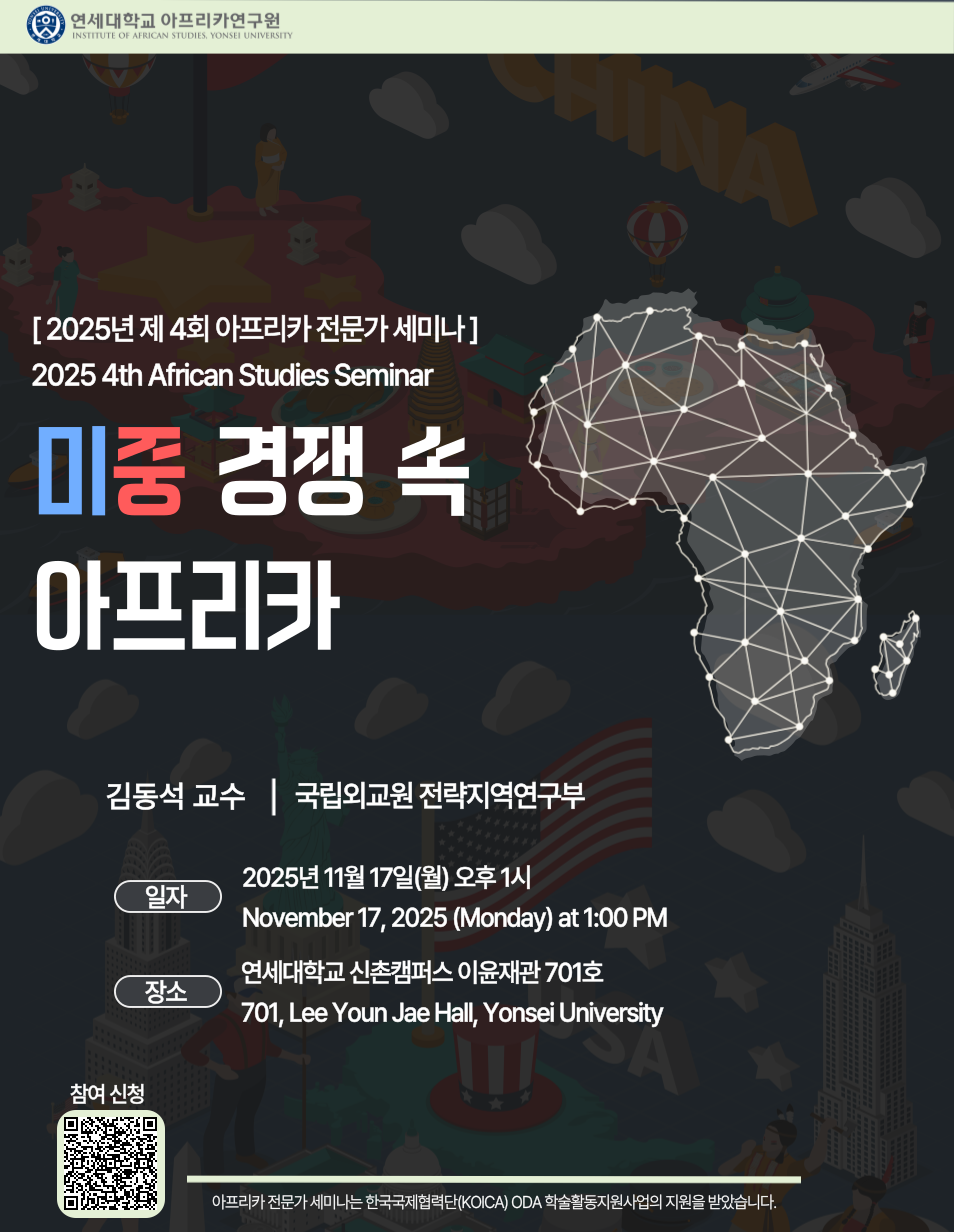
연세대학교 아프리카연구원에서는 11월 17일(월) 오후 1시, ‘미중 경쟁 속 아프리카'를 주제로 제4회 아프리카 전문가 세미나를 개최하였습니다.
강연자 김동석 교수님께서는 국립외교원 외교안보연구소 전략지역연구부 부교수로 재직 중이며, 이번 세미나를 통해 중국과 미국이 아프리카에서 전개하고 있는 경쟁 구도와 그에 따른 지역적·국제적 함의를 심도 있게 분석해주셨습니다.
교수님께서는 아프리카가 풍부한 자원과 젊은 인구 구조를 가진 잠재력 높은 대륙임에도 불구하고, 인프라 및 거버넌스 취약으로 인해 발전이 제약받고 있는 현실을 짚으며 강연을 시작하셨습니다. 중국은 냉전기부터 이어진 관계, 대규모 인프라 투자, 조건 없는 지원을 바탕으로 강한 영향력을 구축해 왔으나, 그 이면에는 부채 부담, 고용 부족, 부패 유발 등 부정적 효과도 나타나고 있음을 설명하셨습니다. 반면 미국은 중국 견제를 중심으로 접근하고 있으나 일관성 부족과 제한적 소통으로 인해 아프리카 국가들과의 신뢰 구축에 어려움을 겪고 있으며, 최근 트럼프 행정부 재집권 이후 자원 확보와 중국 압박을 위해 평화중재 및 인프라 프로젝트에 적극성을 보이고 있다고 말씀해주셨습니다.
또한 교수님께서는 아프리카 국가들이 미·중 어느 한쪽에 일방적으로 기울기보다는, 자국의 이익을 극대화하기 위한 균형적 외교 전략을 추구하고 있다는 점을 강조하셨습니다. 중국과는 오랜 협력으로 친밀감을 유지하면서도 반중 정서를 함께 갖고 있으며, 미국에 대해서는 기대와 경계가 공존하는 복합적 태도를 보이고 있다는 점도 주요하게 분석되었습니다.
연세대학교 아프리카연구원은 앞으로도 아프리카 전문가 세미나를 지속적으로 운영하여, 학생·교수·전문가 간의 학술적 교류를 촉진하고, 아프리카 연구의 지평을 넓혀갈 계획입니다.
--------------------------------------------------
The Yonsei Institute for African Studies hosted the 4th African Expert Seminar on November 17, titled “Africa amid U.S.-China Competition.” The seminar featured Professor Dongseok Kim, Associate Professor at the Center for Security and Strategy of the Korea National Diplomatic Academy, as the invited speaker.
Professor offered an in-depth analysis of how the strategic rivalry between the United States and China is unfolding across the African continent and the implications this has for regional and global politics. He began by highlighting Africa’s vast potential—its abundant natural resources and exceptionally young population, while also pointing out the persistent challenges posed by weak infrastructure and governance.
He explained that China has built strong influence in Africa through long-standing historical ties, large-scale infrastructure investment, and assistance that comes with relatively few political conditions. However, he noted that China’s engagement has also generated negative side effects, including debt burdens, limited job creation, and the exacerbation of corruption in some cases. In contrast, the United States has approached Africa largely through the lens of strategic competition with China, but has struggled to build trust due to inconsistent policy priorities and limited on-the-ground communication. Since the return of the Trump administration, the U.S. has become more active in peace mediation and infrastructure initiatives aimed at securing resources and countering China’s presence.
Professor emphasized that African states are not simply aligning with either power but are instead pursuing balanced, interest-driven diplomacy, seeking to maximize their own national interests. Although many African countries maintain close ties with China due to long-standing partnerships, they also express ambivalence and episodes of anti-China sentiment. Likewise, attitudes toward the United States combine both expectations and cautious skepticism.
The Yonsei Institute for African Studies will continue to host expert seminars to strengthen academic exchange among students, faculty, and specialists, and to foster deeper and more comprehensive discussions on Africa-related issues.
